How to start a grimoire when you don't know where to begin
July 15, 2026
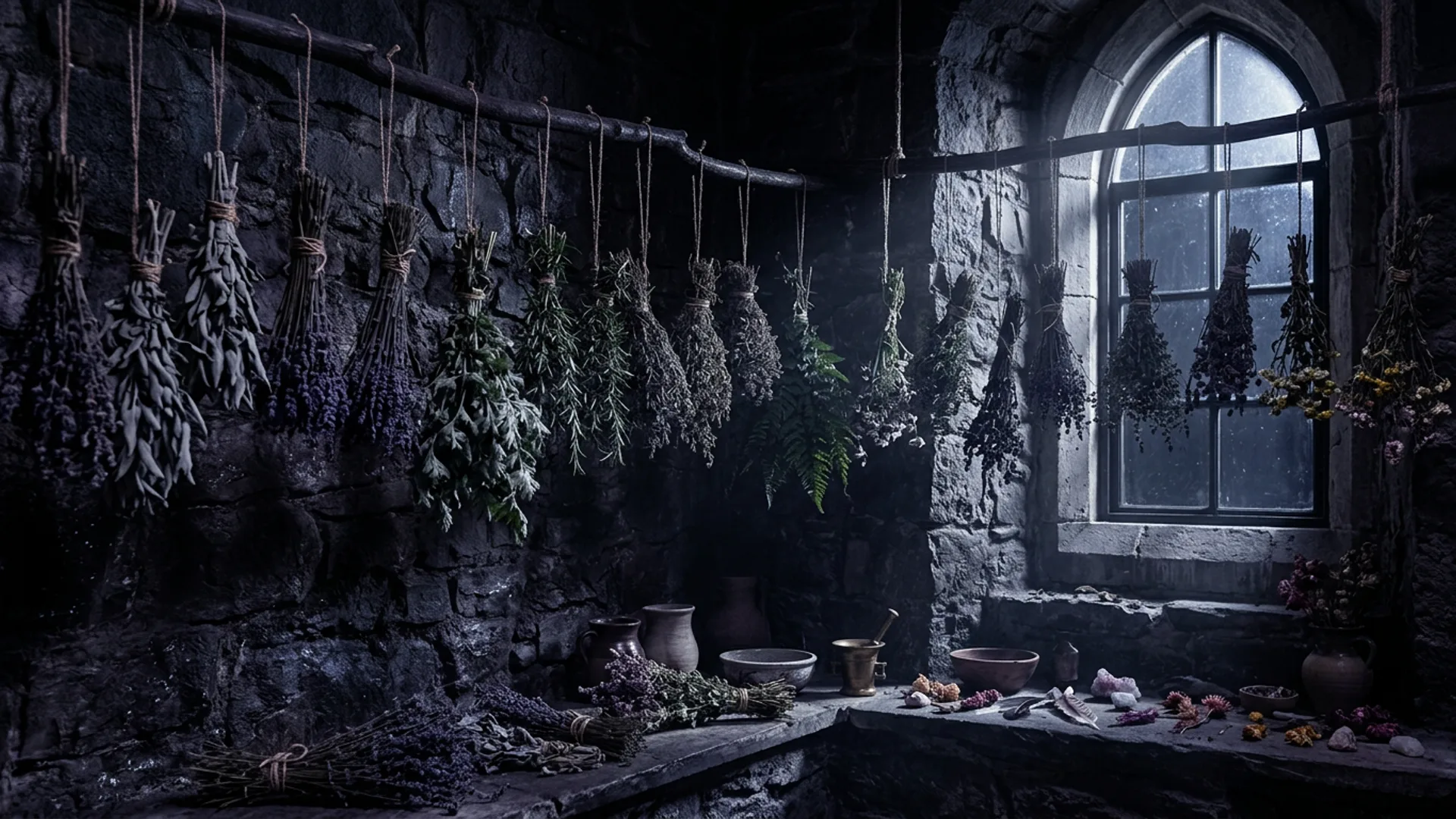
The blank-page problem is not a failure of commitment. It's a structural problem, and it has a structural solution.
Most practitioners who abandon their grimoire in the first month do so because they open a beautiful blank journal and have no idea what belongs on page one. The tradition gives you the what — correspondences, spells, rituals, seasonal markers — but it rarely tells you how to build a working reference from those pieces.
This is what a grimoire framework is for.
Start with the structure, not the content
Before you write a single spell, decide what your grimoire IS. A grimoire is a reference, not a journal. The entries you write in month one should still be findable and useful in year three. That means consistent structure matters more than beautiful handwriting or artistic spreads.
A working grimoire needs:
- A table of contents (or at least a consistent index system)
- Dedicated sections for each type of reference: herbs, correspondences, rituals, personal records
- A clear distinction between established craft knowledge and your own experiments
The first seven entries
If you're not sure where to start, these seven entries will ground any practice:
- The elemental framework (earth, air, fire, water — your working understanding of each)
- The lunar cycle as you'll use it (not as a wall chart — as a working ritual calendar)
- Your three primary herbs and their correspondences
- A single protection spell you've worked at least once
- An altar inventory — what you keep and why
- A note on how you enter and close ritual space
- Your first seasonal record (whatever sabbat is closest)
These seven entries are not complete. They are a foundation. Every practice is different, and your grimoire should diverge from any template once you have enough of your own records to draw from.
What a template can and can't do
A good grimoire template removes the blank-page problem by giving you the structure without filling in the content. The distinction matters: a template that comes pre-filled with generic spells and stock herb charts is a book about witchcraft, not a record of your practice.
The Smoke and Sigil grimoires are frameworks: structured sections, guided prompts where useful, and enough open space for the craft to become yours. They don't tell you what to believe about your practice. They give you a place to put it.
If you've been putting off starting, this is the structural answer. The creative problem — what goes on each page — is one you solve by practicing, not by waiting for the right moment.
Keep reading
- Working with the new moon: a practical approach
The new moon is not a deadline. Here's how to treat it as a tool.
July 22, 2026